Lab news
Members of the Abuelo Lab will update on their activities and progress. Archives
August 2023
Categories |
Back to Blog
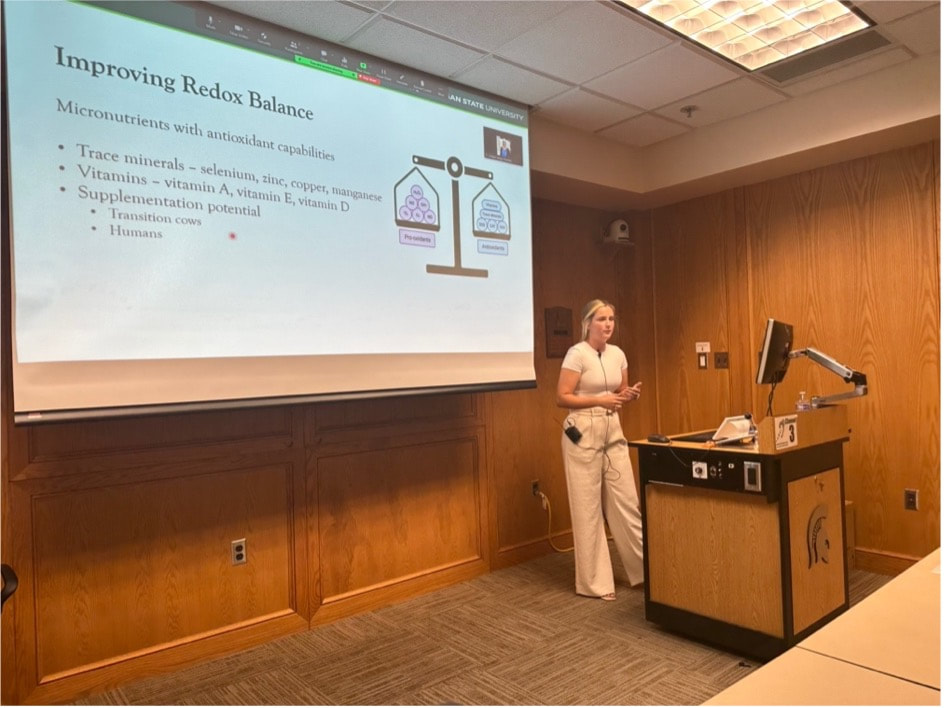
Flying the nest8/31/2023 Hannah Carlson, MSThe last few months have been filled with major accomplishments. In July, I finished writing my dissertation titled “Antioxidant Supplementation for Immunity, Growth, and Health of Dairy Calves” which documents the research I have been doing for the past two years. Shortly after in August, I defended my thesis, presenting my research to my committee, colleagues, and college members. While stressful, the day of my defense was filled with so much love and support from my peers. After successfully defending, I prepared for graduation by formatting and submitting my dissertation for publication. The process of formatting was tedious; however, I am so excited to see the printed copy of my work! As of last week, I can officially say I have completed my master’s program, concluding the most challenging yet rewarding two years. Thankfully, I will be sticking around a little longer, finishing up some work to get my literature review and research article published in a peer reviewed journal. I will also be submitting veterinary school applications in a few weeks, and I am so excited to begin this new chapter. While you will still find me around the lab, more sleep and a little fun will fill my schedule. Especially because it’s now fall…. My favorite time of year!
For any student considering a graduate research program who might be hesitant about the writing it entails, or even those who are about to begin writing, you can do it. Grab a large coffee (or a few), your four-legged friend if you have one (borrow one if not), and just start. The hardest part about writing is starting it, but you are documenting all YOUR hard work, let that shine. Don’t forget to celebrate the wins, big and small. Hold your people close and enjoy every moment because it goes by fast. 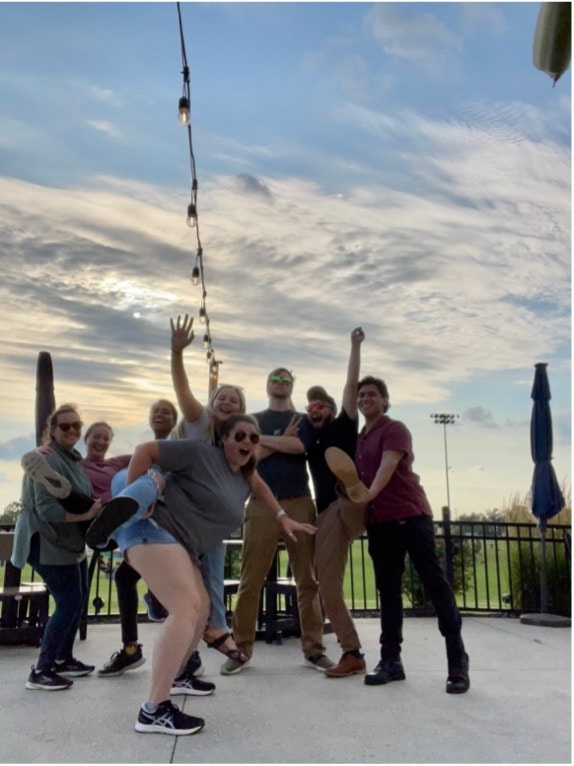
0 Comments
Back to Blog
First Oral Immunization8/11/2023 Rafael Castro Vargas After embarking on a journey through the intricate landscapes of veterinary vaccinology, the time has come! My first oral presentation was every day closer. We spend hours and hours determining the best route to present the data, much like we were finding the best routes to vaccinate, finding the correct times not to bore the audience, and formulating the best connectors to enhance the power of our presentations as we do with adjuvants, and finally, as vaccine development demands precision, learning the critical difference between the words shedding and shredding. At first glance, the situation looked entirely out of my comfort zone, beyond the pressure and anxiety of presenting, mainly due to the linguistic boundaries I fortify myself against the tide of nerves that threatened me. In retrospect, this was an invaluable experience. Now, I know that the way to generate an adaptative response is by accepting the transformative power of facing challenges. Also, I must especially mention that the guidance, support, and encouragement of Dr. Abuelo and all my lab mates made my presentation better as immune cells amplify each other's potential to mount a good response. Now, I’m looking forward to the next challenge, carrying a reminder that this is but the first immunization in a series of doses to mount an eloquent and seasoned response in the face of oral presentations (What a bunch of silly immunological jokes and analogies we got here). 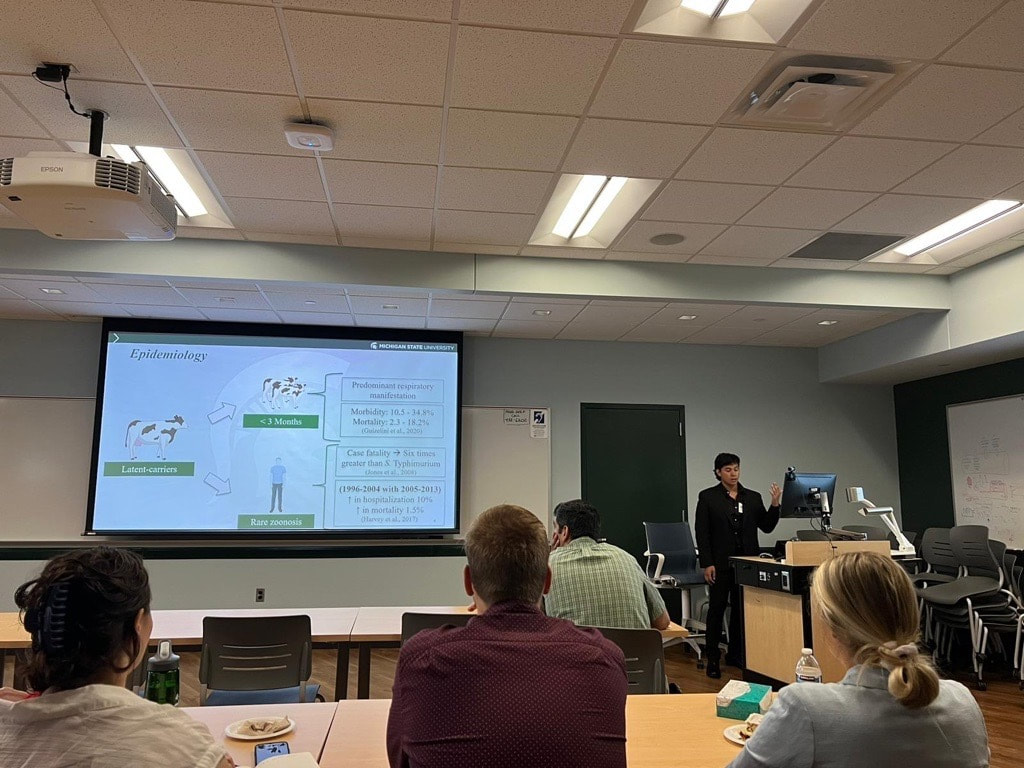
Back to Blog
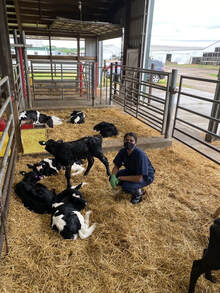
Mentoring a FSF student8/10/2023 Eric Owczarzak This summer I got to work with a student as part of the FSF summer student program. I have never taken part of a summer research program and have never directly worked with a student who was partaking in a summer research program, so I had zero expectations or assumptions going into this summer. This program includes students who are admitted or enrolled into an accredited veterinary program in the Unites States. Needless to say, the research experience of those that enroll can range from never stepping foot inside of a research laboratory to those who have spent years in research either at the undergraduate or graduate level. I’ve spent about a year and half here at the lab learning new skills and techniques, ranging from cell culture to a simple blood draw via tail stick, and now it was time to put those new skills to the test. The student we were assigned had a lot of small animal experience but never had experience with large animals, including bovine; they also had no past research experience. This meant I was provided with the unique opportunity of teaching a student a completely new set of skills in a short period of time, with my newly acquired skills. The extent of which I got to teach our student includes proper bovine management, blood collection via tail vein, proper laboratory techniques (ranging from lab safety to basic pipetting),cell isolation, cell culture, and a variety of assays using either flow cytometry or plate readers. On top of all this, I was also learning these specific assays for the first time and learning how to isolate neutrophils, as these were our target cells for the project. This provided another unique challenge of both learning and teaching at the same time. It was slow at first as finding the best method for neutrophil isolation proved difficult, although we were able to complete our goal. Then, we moved on to validating our assays with our target cells. This also was a long project as it required us to master each assay to ensure we could replicate it later on in the project. However, by the time we finished validating our neutrophil isolation, treatment groups, and assays, the summer had come and gone. We were able to completely validate all that needed to be validated but sadly could not finish to the point of final results. I believe this summer was a learning experience for both me and our summer student as they got to learn a lot about laboratory science and research, and they certainly learned a lot about cows, whereas I got to assume a leadership role where I both taught a student entirely new skills while I also learned new skills myself. My final comments on this experience was that it was a unique learning opportunity that proved to be very difficult, as it required very quick learning and interpreting as well as a great deal of patience, but in the end it greatly expanded my skillset and leadership skills. 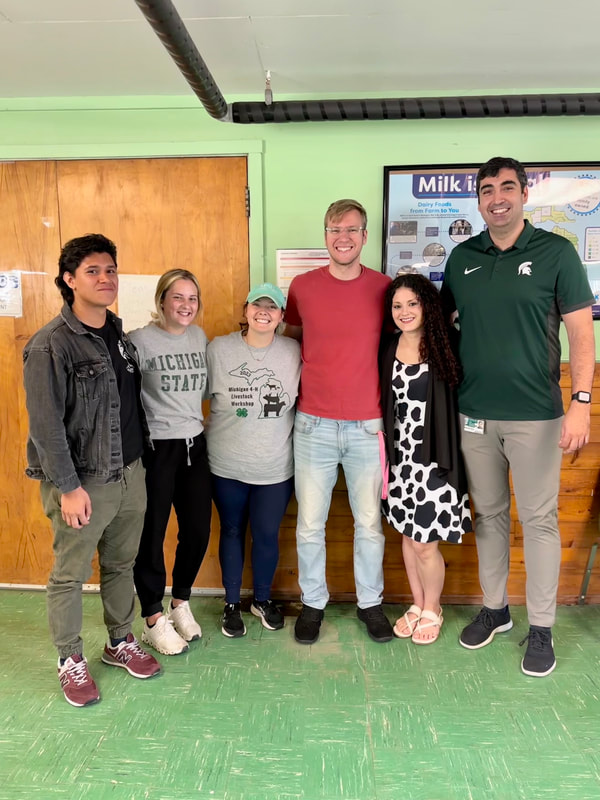 Picture of the lab with the summer student
Back to Blog
New Grant Alert7/12/2023 Katy W. Kesler am humbled and excited to announce that my United States Department of Agriculture’s National Institute of Food and Agriculture (USDA NIFA) Predoctoral Fellowship “Harnessing the antioxidant potential of zinc and metallothionein to improve neonatal dairy calf vaccine responsiveness” was funded! This fellowship is part of the USDA NIFA’s Education and Workforce Development Program from the Agriculture and Food Resource Initiative (AFRI) which provides $68 million in funding for agriculture related projects in the six program areas listed below.
Back to Blog
3 new publications this week2/24/2023 Dr. Angel AbueloThis has been a productive week for the lab in terms of publication outputs! Three articles from our work have seen the light of day this week:
In a collaboration with Dr. Mann from Cornell University, we have described how we designed and built a continuing education program for early-career bovine veterinarians to support early graduates in their first years in practice.
HAPPY READING!
Back to Blog
CRWAD 20231/24/2023 The lab traveled to Chicago this weekend for the Conference for Research Workers in Animal Disease (CRWAD). The students had the opportunity to learn about the interesting research happening at other universities as well as learn from leaders in the field at the American Association of Veterinary Immunologists (AAVI) Symposium. Students also had the opportunity to share their research and practice scientific communication skills during the poster symposium. Conferences offer great opportunities for graduate students to meet new people and network and this conference was no exception! Abuelo lab members had a great time getting to know the McGill lab from Iowa State University, who knows what collaborations might come out of these new friendships. The trip ended with a sweet trip to Ghirardelli for ice cream! Overall, everyone had a great time learning and sharing their research with like-minded individuals who are passionate about improving animal health and welfare!
Back to Blog
Katy KeslerI submitted my first USDA grant for a predoctoral fellowship for my proposed PhD project using zinc to enhance lymphocyte functions relevant to vaccination in dairy calves. If awarded, this grant will provide me funding for the next 3 years of my PhD and allow me to participate in personal growth opportunities such as an international experience in London, UK studying zinc redox biology. This experience gave me the opportunity to improve my written communication skills, grantsmanship, and the importance of comma placement (although my advisor might argue that I still have a long road ahead on this...). I have been working tirelessly (that’s a lie, I am very tired) on this grant for months and am anxiously awaiting a response from the USDA. While I appreciate everything I learned in the writing process, I am excited to get back to the bench!
In reflection, I have some advice for future grant writers about the writing process.
Back to Blog
New Grant Alert!!!11/3/2022 By Angel Abuelo
Exciting news in the Abuelo Lab! We can now announce that the lab has received one of the very competitive "National Needs Fellows" training grant from the USDA National Institute of Food and Agriculture. Through the grant "Strengthening Dairy Health Through Multidisciplinary Doctoral Training of Veterinary Scientists", the lab will train 3 Ph.D. scientists in the next 5 years to enhance dairy health biosecurity through the optimization of immunity. This is a great opportunity to work with us and our many collaborators worldwide. Due to the conditions of the grant, this opportunity is only open to US citizens or permanent residents (no exceptions are allowed). If you are interested in our work, please contact us!
Back to Blog
New Lab Member11/2/2022 The Abuelo lab would like to welcome Rafael Castro Vargas to our lab this semester! Rafael is a veterinarian originally from Colombia and initially joined our lab as a visiting scholar in September 2022. Yesterday Rafael was officially accepted in the Comparative Medicine and Integrative Biology graduate program! Rafael has previous experience conducting important research for the food animal industry including but not limited to his work with Staph. aureus. Rafael’s proficiency with veterinary medicine and research will make him a tremendous asset to the lab. Rafael will be working on our Salmonella enterica serotype Dublin projects. Rafael will produce vaccination recommendations that dairy producers can immediately implement, making his project critically important for the health and welfare of dairy calves.
Despite only having recently arrived in Michigan, Rafael has already been participating in classes and started screening animals for enrollment on his project. We are so excited to have Rafael join the lab and cannot wait to see the important contributions that he makes to the dairy industry. Welcome to the lab Rafael!
Back to Blog
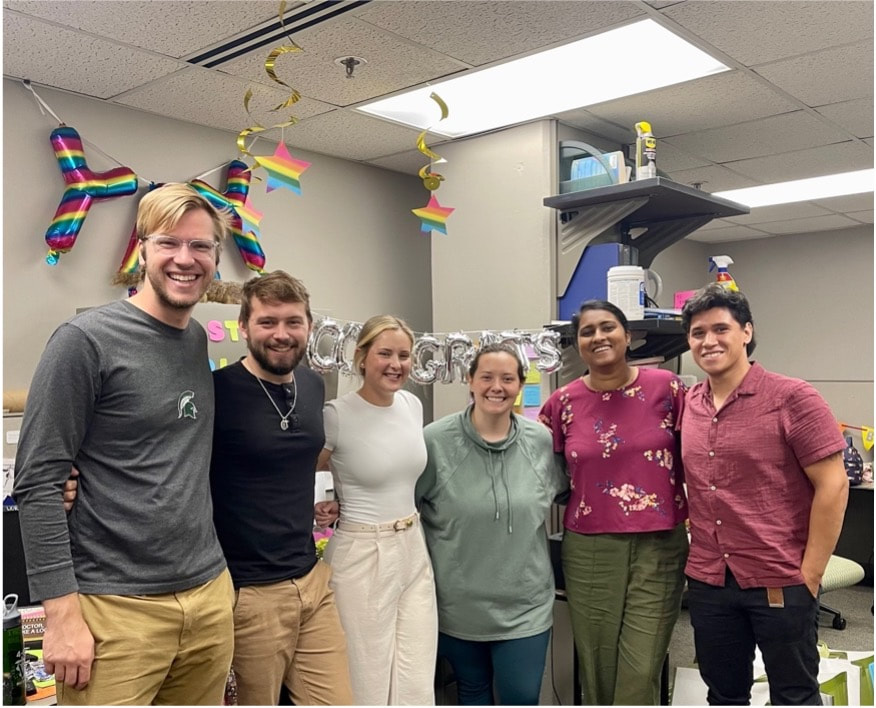
Arpita is an exceptional student who in her first semester has a full course load, taken charge of her project, and presented at national conferences. We are very excited for Arpita’s award and cannot wait to see what important work she continues to produce throughout her PhD. CONGRATULATIONS ARPITA!
|
 RSS Feed
|
Abuelo Lab
College of Veterinary Medicine 784 Wilson Rd., East Lansing MI 48824 United States |